

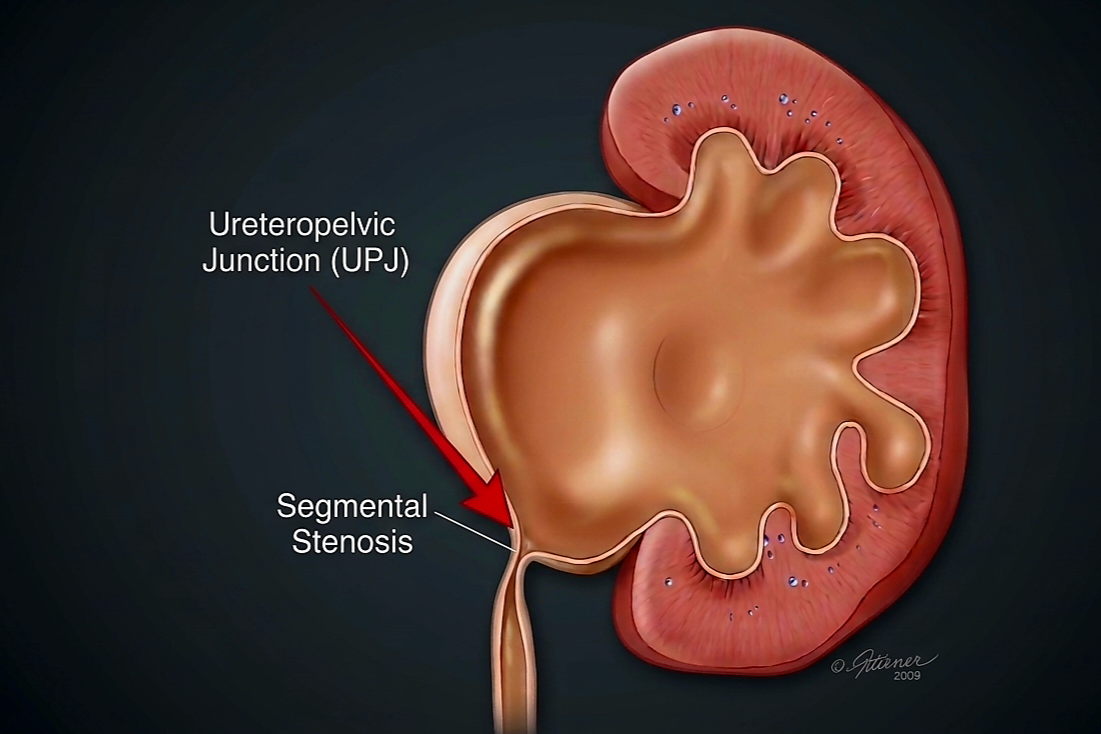
Hydronephrosis is the dilation of the renal pelvis and calyces caused by impaired urine drainage. It may be detected during prenatal ultrasound examinations or after birth during routine ultrasound evaluation.
Not every child with hydronephrosis requires surgery. In many cases, regular ultrasound follow-up and monitoring of renal function are sufficient. However, surgical treatment may be indicated when there is significant urinary obstruction, deterioration of kidney function, recurrent urinary tract infections, or progressive dilatation.
Modern diagnostic methods help identify the underlying cause of hydronephrosis and determine the most appropriate treatment strategy. When necessary, minimally invasive surgical techniques are used to restore normal urine flow and preserve kidney function.
Early diagnosis and timely treatment are essential to prevent irreversible kidney damage and ensure healthy long-term renal development in children.